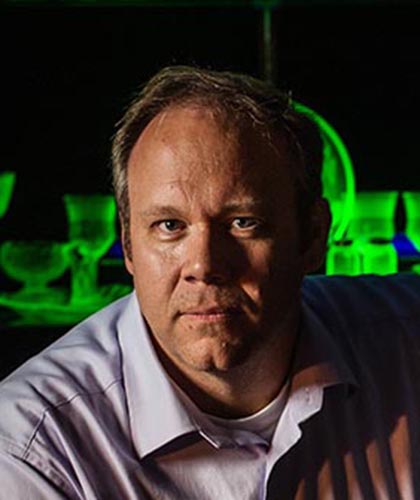
Koeth, Timothy W.
Clark Faculty Fellow
DARPA Directors Fellowship Recipient
DARPA Young Faculty Award Recipient
Former Director, UMD Nuclear Reactor & Radiation Facilities (2013 - 2019)
UMD Radiation Facilities Director of Research
Chair of UMD Radiation Safety Committee
Chair of UMD Reactor Safety Committee
National Museum of Nuclear Science & History Board of Trustees
Maryland Energy Innovation Institute
EDUCATION
- Ph.D., Physics, Rutgers University, 2009
- B.S., Physics, Rutgers University, 1997
HONORS AND AWARDS
- UMD 2026 Research Excellence Exemplary Honoree
- DARPA Young Faculty Award (YFA) Director's Fellowship Award 2024
- DARPA Young Faculty Award (YFA) 2022
- 2025 Breakthrough Prize in Fundamental Physics (awarded to members of CMS)
- Board of Directors, National Museum of Nuclear Science & History (2020 - present)
- Richard J. Plano Dissertation Award, Best Annual Rutgers Physics Ph.D. (April 2010)
RECOGNITION
• Terp Magazine, “Keeper of the Codes,” May 20, 2026
• WIRED The Low-Stakes Race to Crack an Encrypted German U-Boat Message August 27, 2023
• NPR Morning Edition Interview, “Mystery of German Uranium Cube,” August 29, 2019
• Forbes, “The search for lost Nazi Uranium,” May 20, 2019
• Washington Post, “How Nazi Gzermany got a lot closer to building a nuclear weapon in WWII,” May 12, 2019
• Cosmos, “Physicists-turned-sleuths hunt for WWII German Uranium,” May 7, 2019
• ScienceNews, “How Scientists traced a uranium cube to Nazi Germany’s nuclear reactor program,” May 7, 2019
• DailyMail, “Hunt for Hitler’s missing Uranium,” May 7, 2019, featuring Timothy Koeth’s German uranium history of science project.
• Washington Post Magazine, “Accelerated Learning,” Sept 11, 2016
• Nuclear News “ ‘New’ Fuel for University of Maryland Research Reactor” June 2017
• Department of Energy's announcement of "UMD's New Used Fuel"
• Terp Magazine, “Beam Team,” May 16, 2017
• Physics Today, featured in BackScatter column, April, 2011
• symmetrybreaking article on the “Physics of Scotch Tape,” January 2011
• symmetry magazine article on the "DIY Cyclotron," August 2010, featured Small Cyclotron Conference
• Make Magazine article, April 2005, reporting on personally built cyclotron
• Physics Today "Building a Cyclotron on a Shoestring" November 2004, featured personally built cyclotron
Timothy Koeth's Research Interests
My research is centered on materials science at the extremes, with particular emphasis on the behavior of matter under intense electric fields, radiation, and charged-particle loading. My work integrates concepts from physics, chemistry, and electrical engineering to understand and control materials performance in environments relevant to accelerators, radiation detectors, and nuclear and energy technologies.
Prior to entering graduate school full-time, I held engineering research appointments at Fermi National Accelerator Laboratory and Rutgers University, experiences that fundamentally shaped my research direction. At Fermilab, working with Dr. Helen Edwards, I designed compact superconducting RF cavities for particle beamlines, gaining early exposure to accelerator materials, cryogenic systems, and high-field RF environments. I then joined the high-energy physics group at Rutgers under Prof. Steve Schnetzer, where I worked on radiation-hard charged-particle detectors fabricated from CVD diamond.
At Rutgers, my work focused on the materials processing, metallization, and characterization of diamond detectors. I developed and executed complex surface preparation and metallization protocols, including chemical treatments followed by Ti/W/Au sputtering to form ohmic contacts, annealing, and fine-pitch wire bonding. I designed test stands for detector evaluation and identified methods to assess diamond purity. Through these studies, we discovered that charge traps could be depopulated and repopulated through controlled exposure to x-rays, leading to enhanced detector performance. I subsequently developed a prototype in situ x-ray pre-dosing system to condition the diamond material prior to detector operation. I also designed and built a custom RF-driven oxygen asher for diamond surface preparation, work that reinforced my appreciation for specific materials processing. These experiences solidified my conviction that advances in high-energy physics, accelerator science, and nuclear technologies are fundamentally limited, and enabled, by materials behavior under extreme conditions.
I returned to Fermilab for my PhD under Dr. Helen Edwards, where my training expanded to encompass beam physics, cryogenic systems, low- and high-level RF systems, vacuum technology, electron beam welding, hydrogen brazing, and large-scale project management. This period provided both deep technical grounding and experience in leadership within complex scientific facilities.
In 2009, I joined the University of Maryland as a postdoctoral researcher at the University of Maryland Electron Ring (UMER). Shortly after arriving, I became involved with the UMD Nuclear Reactor and Radiation Facilities and began experimental investigations into electron loading of dielectric materials using the electron linear accelerator. Motivated in part by earlier observations of dielectric discharges, I performed preliminary discharge velocity measurements that initially appeared implausibly fast. These early experiments laid the foundation for a sustained research program in dielectric breakdown phenomena.
In 2013, I was appointed Director of the UMD Nuclear Reactor and Radiation Facilities, with responsibility for renovating and transforming the facility into a modern, world-class teaching and research center. As a result the facility became a nationally recognized resource for education and research in radiation science. I maintained an active materials research program throughout my directorship, and I am proud of the continued success of the facility under subsequent leadership.
In 2019, I joined the Department of Materials Science and Engineering as an Assistant Professor, where my research has focused primarily on dielectric materials subjected to intense space-charge loading. My group was the first to employ high-speed imaging to directly visualize the dynamics of Space-Charge-Induced Dielectric Breakdown (SCIDB). We have since discovered and characterized a previously unknown breakdown mode—termed “Ivy-type” breakdown—with measured propagation velocities exceeding 10⁷ m/s, among the fastest dielectric breakdown phenomena ever reported. This work has resolved long-standing experimental anomalies and established new physical regimes for dielectric failure. In recognition of this research, I was awarded the DARPA Young Faculty Award in 2022 and the DARPA Director’s Fellowship in 2024.
While my current emphasis is on dielectric materials, my broader research interests include materials for radiation and nuclear science and technology, encompassing the generation, detection, and manipulation of neutrons, charged particles, and electromagnetic radiation. I have a strong background in intense electron and ion beam accelerators and beam optics, and I am interested in applying these tools to novel energy-storage materials, radiation-hard devices and detectors, and high-power RF sources.
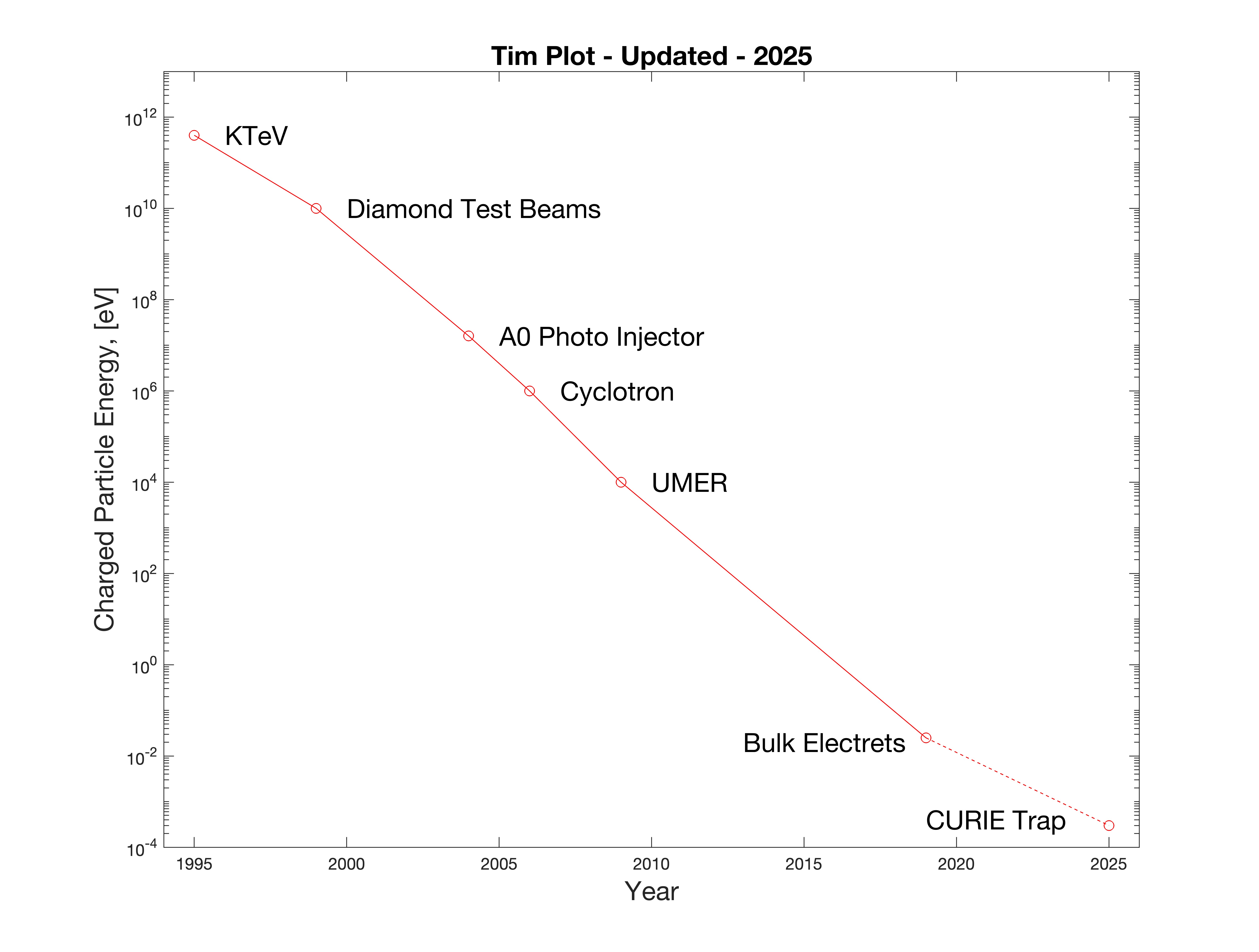
For fun, I’ve tracked the average energy of the charged particles I’ve worked with throughout my career in an informal ‘Livingston plot’ of sorts, except that mine trends logarithmically downward with time. It’s tempting to ask what the extrapolation would imply.
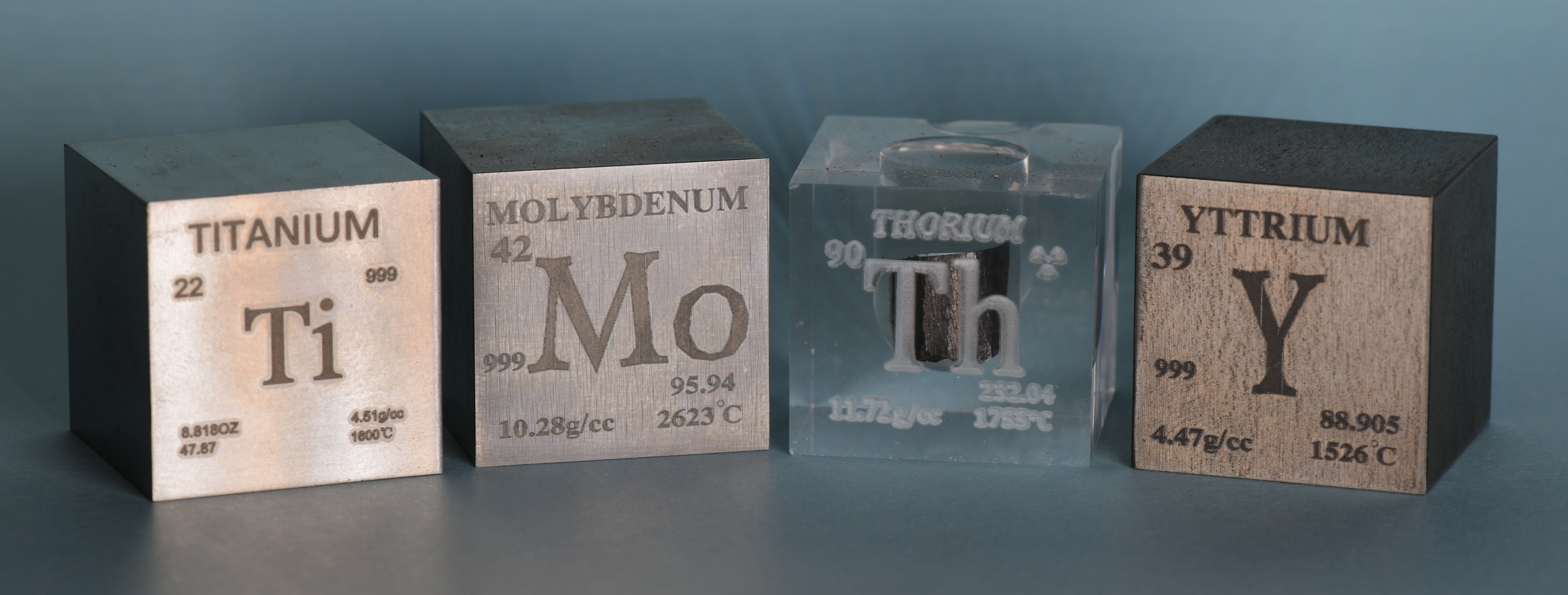
Nominative determinism ?
Tim Koeth's projects summary: By far, my group’s primary project over the past few years has been one that focuses on Charge Loaded Dielectrics, in which high energy electrons become embedded in insulating material, accumulate to the point where the internal electric field exceeds the material’s breakdown strength. Upon initiating dielectric breakdown, the insulator quickly becomes a metallic like conductor. As a consequence, my group has brought extreme high speed photography, up to a frame rate of 1 billion frames per second, into the materials characterization tool box.
We are also working on radiation induced materials damage. This spans antique papers, electrical insulators, and state of the art detectors, specifically ones used in CERN’s Large Hadron Collider’s (LHC) Compact Muon Solenoid (CMS) heavy ion Spectator Reaction Plane Detector (SRPD), as we are able to emulate the same heavy ion induced electro-magnetic shower environment with UMD Radiation’s Faculties’ electron linear accelerator.
I love neutrons! I have made neutrons in almost every way possible. Because of their electrical neutrality, they are an ideal tool for probing material at the smallest scale in bulk material, identifying fannishly trace quantities of metals, and non-destructively detecting the presence of, and quantifying hydrogen bearing compounds within bulk materials. One of my contributions to the University of Maryland, was to initiate a neutron radiography program. I have a list of project longer than my life will permit, which is a delightful circumstance. I have been already been fortunate to have accomplished many seemingly impossible feats, learning a few of natures secrets along the way.
The following are deeper dives into each of our current projects:
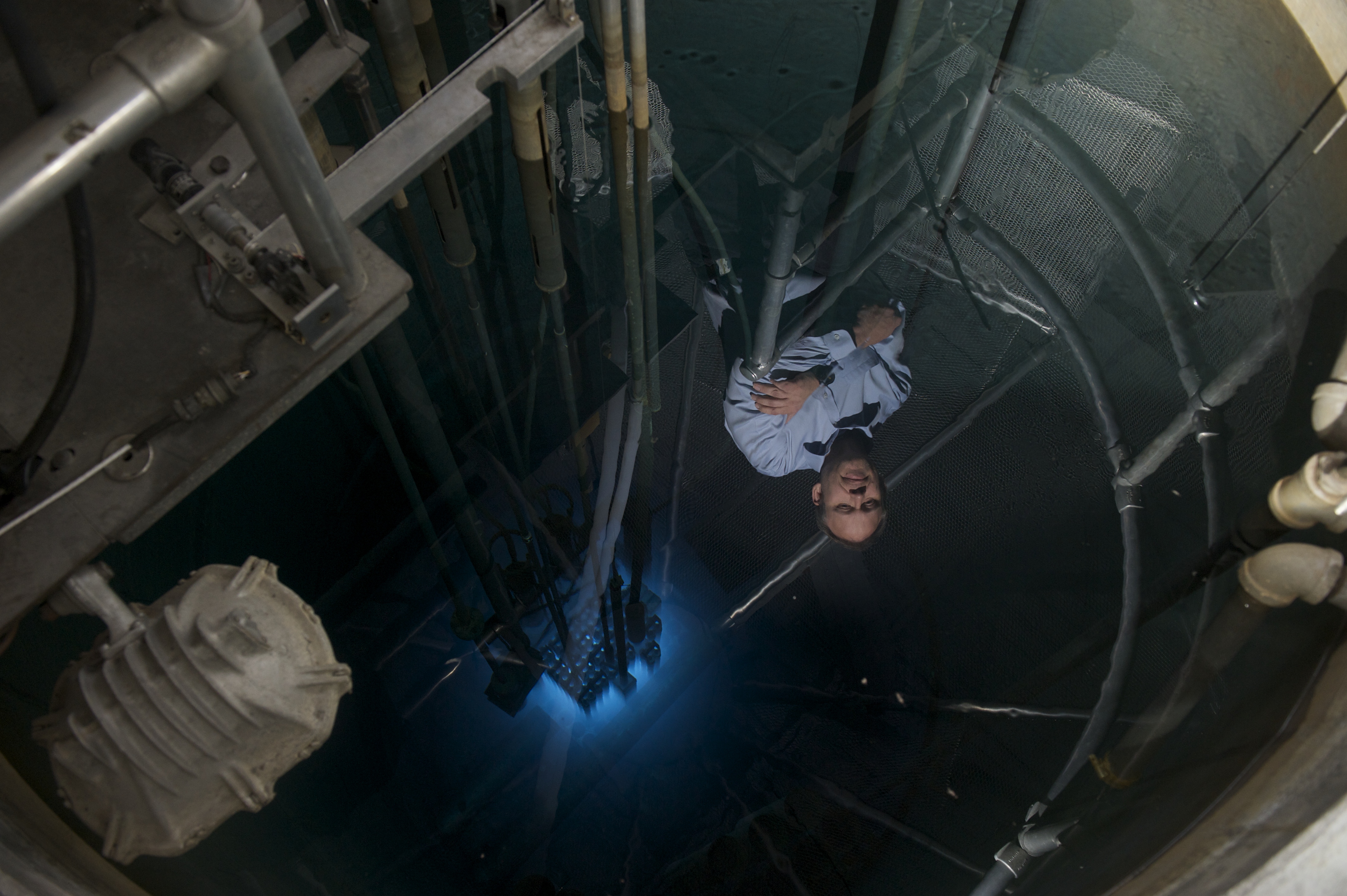
I. Charge Loaded Dielectrics. My group has been pioneering a new field in materials science, the fundamental study of Charge Loaded Dielectrics (CLD). By far my group’s primary project over the past few years has been in which high energy electrons become embedded in dielectrics and accumulate to the point where the internal electric field far exceeds dielectric breakdown, and the insulator quickly becomes a metallic like conductor.
In addition to making measurements and developing supporting theory, we have had to create a lot of the instrumentation necessary for our data collection which simply did not exist. We had to invent it, and then build it. Our accomplishments include the first ever video of space charge induced dielectric breakdown (SCIDB), which we recorded in two independent and different ways. During these measurement we discovered and subsequently imaged a new ultra-fast (>10,000,000 m/s) dielectric breakdown mode, which we have named Ivy Type. This was so remarkable that it has been featured in a Science article.
My group discovered why SCIDB happens in a front, like waves moving through the material, rather than diffusely, as little arcs and sparks all throughout the material. We have brought clarity and definition to my two-decade-long bizarre observation, and we have generated the first derivation of the "conductive layer" model of breakdown. This is impressive because it answers and predicts many otherwise unexplained phenomena. We have verified, with our sophisticated home-brew dynamic pulsed electroacoustic (PEA) for bulk materials system, the implanted electron charge distribution and the charges subsequent motion. The dynamic PEA is a nondestructive in-situ measurement to “image” embedded charge profile during loading in the linac, and subsequent migration after loading, and finally, the abrupt charge redistribution immediately upon breakdown. We have discovered that the discharge is not an expulsion of excess charge, but rather a dielectric breakdown that is governed by a minimizing of the internal stored energy resulting from a reconfiguration of the electric field.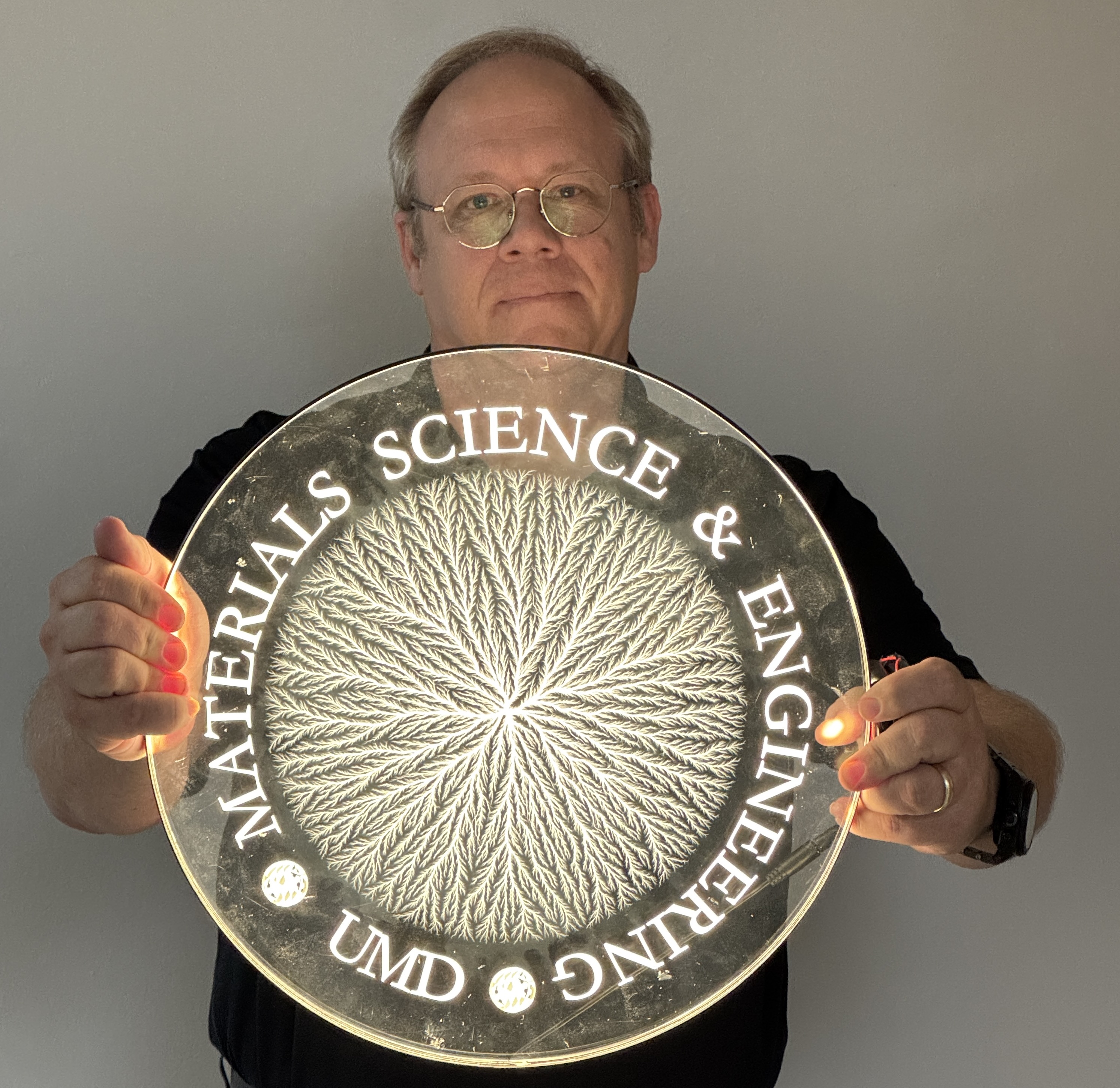 My group is also the first to show that SCIDB breakdown velocity is a balance between a space charge current limit and available electrostatic free energy and charge density, validated by a second, and again homebrew, novel breakdown streak-velocimeter. The combined high-speed velocity data coupled with the measured source impedance (yet another in-house developed instrument), also coupled with the dynamic PEA data, creates the amazing theoretical conclusion that the so-called discharge is rather a metallic-like breakdown layer in SCIDB. From this, we have developed a model, which is a departure from 60 years of community thinking and accepted theory! The breakdown event is NOT an expulsion of excess charge, rather an internal reconfiguration of charge to reduce the energy stored in the dielectric. We have a manuscript out for review in PRX that explains how the community has gotten it wrong all these years and share our first-principles model, and preponderance of supporting experimental data, of SCIDB which applies to all insulating materials.
Our work has unraveled decades-old mysteries about space charge induced dielectric breakdown, which threatens critical satellites necessary for most of modern life (telecom, weather monitoring, navigation, national defense, etc.). Our more complete understanding of SCIDB will enable efficient and reliable satellite designs which save industry and taxpayers untold sums on unexpected mission failure.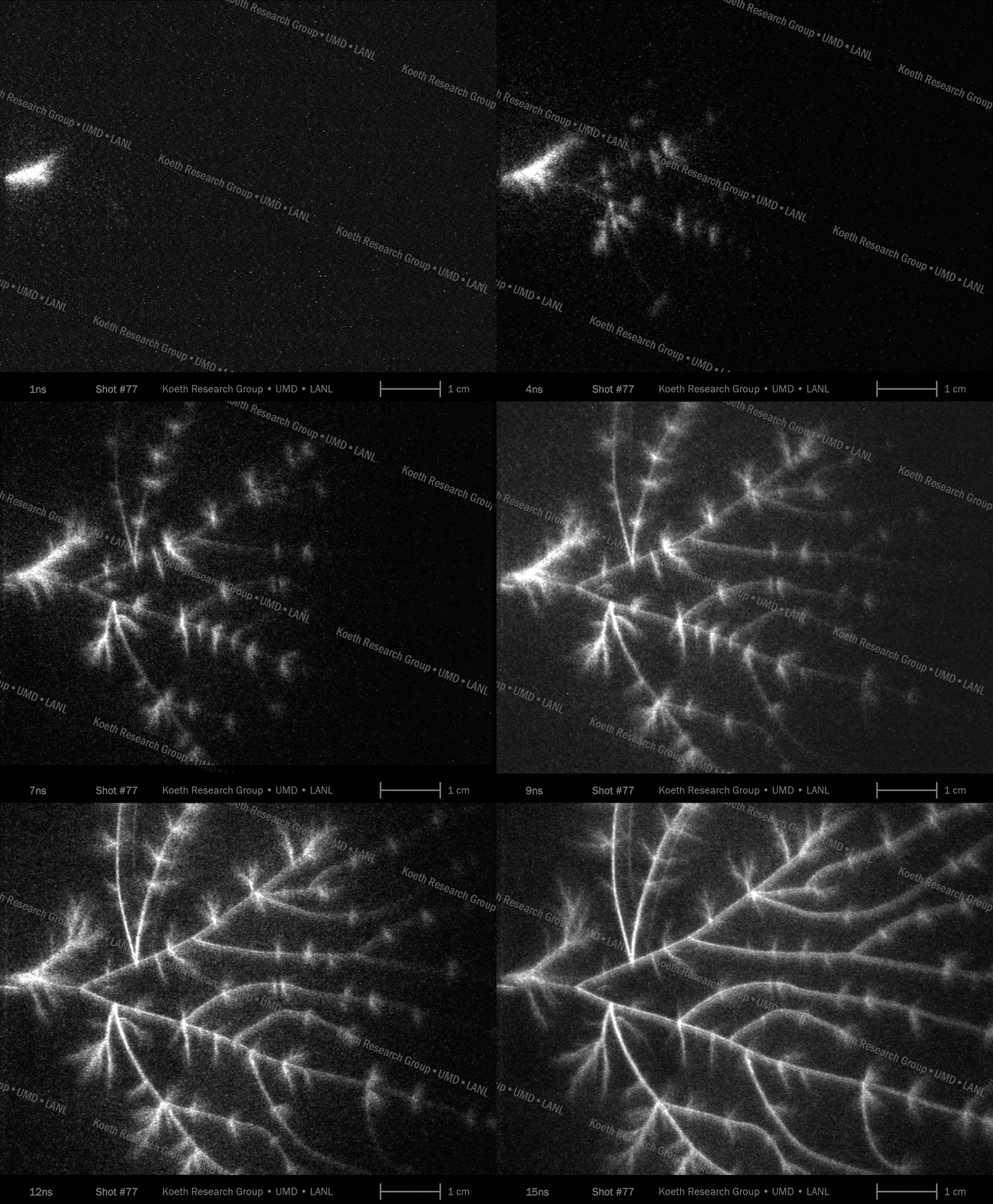
II. CERN's LHC CMS SRPD Detector. Heavy ion collisions (Pb-Pb) at the LHC CMS detector can occur in a variety of manners. They can be head on, peripheral, or somewhere in between. Each of these have an impact on the subsequent quark gluon plasma conditions. It is important to identify these characteristics of the collision. This is partially accomplished in the Zero Degree Calorimeter (ZDC) Spectator Reaction Plane Detector (SRPD). Neutrons and other neutrals from the collisions continue to travel straight from the interaction point with approximately the beam energy. Since they are neutral they are unaffected by the subsequent LHC bending magnets. The so-called spectator neutrons from the collision carry with them information about the dynamics of the collision. The SRPDs are comprised of an array of quartz blocks, and are located between the EM & hadronic sections of the ZDCs. Neutrons and other EM induced showers interact with the SRPD quartz elements and radiate due by Cherenkov Radiation. The subsequent light is captured by wavelength shifting fibers and transported to photomultiplier tubes. The radiation environment is harsh, quickly impacting the performance of the detector. At UMD, Koeth and his team in collaboration with the UMD Radiation Facilities are characterizing the radiation damage of these devices so as to calibrate for signal loss and to implement a design for a new radiation hard detector.
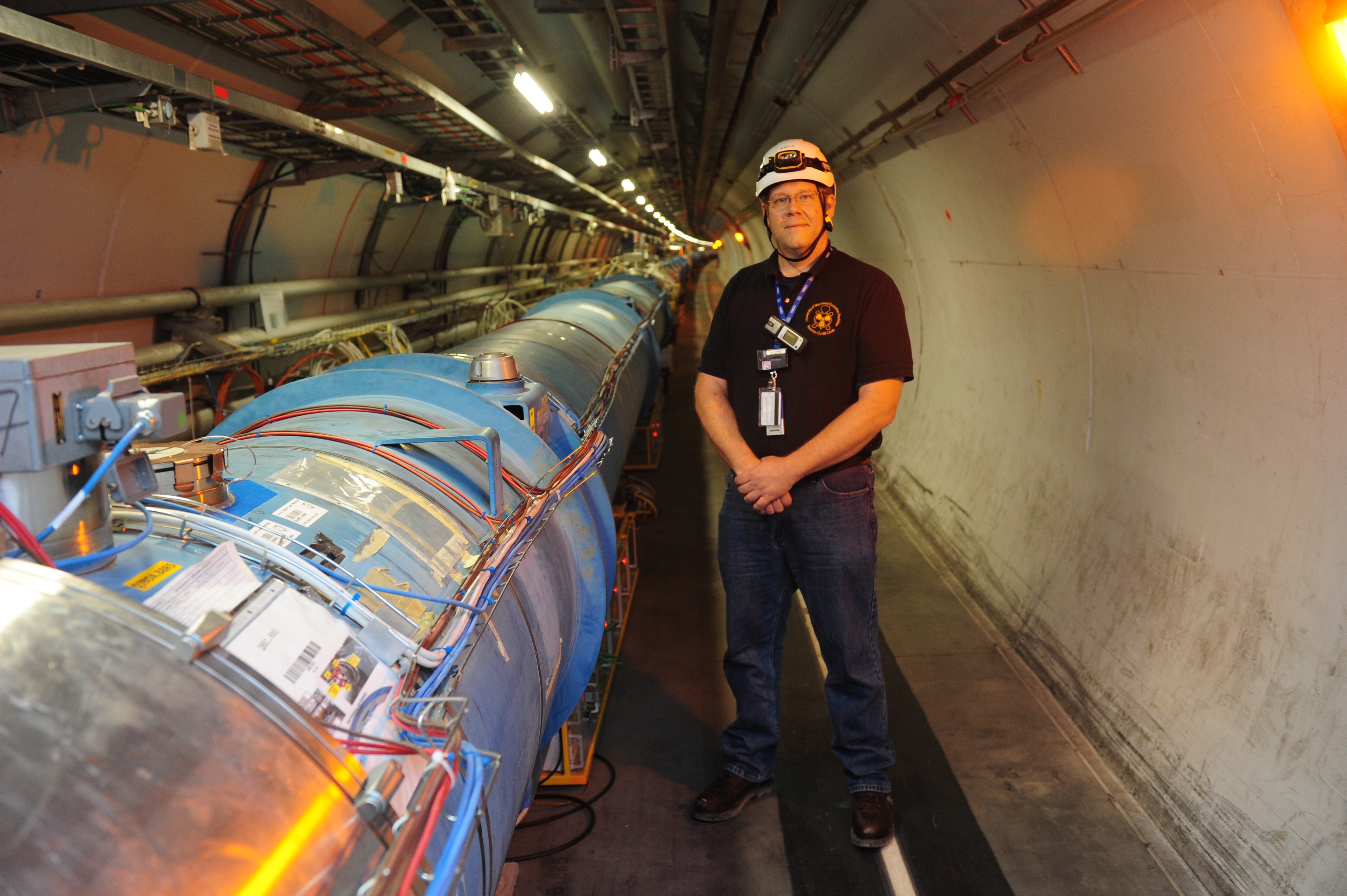
Additionally, we are investigating the slow-dose, long term radiation damage to polymers and paper products:

III. Neutron Imaging is in many ways the perfect complement to x-ray radiography. X-rays can "see" through soft material while not high-Z material such as lead. Neutron Imaging (AKA Neutron Radiography) has just the opposite ability. Neutrons can penetrate lead but are brought to halt in water and plastics. While X-ray systems are plentiful, neutron imaging systems are not. In 2015 Koeth and his team developed a neutron imaging station at the Maryland University Training Reactor, a 250 kW TRIGA reactor.
IV. FUND - Far Ultraviolet Neutron Detector. It is equally important to measure neutrons as it is to make them! Thermal neutron detection is critical to homeland security, oil logging industry, nuclear criticality facilities, and general nuclear research. The standard neutron detector for such applications consists of pressurized proportional detectors loaded with several atmospheres of expensive and rare 3He. In addition to the scarcity, 3He detectors require high voltage and are necessarily limited to cylindrical geometry, which is then subject to microphonics, shock, and sensitivity to variation in bias high voltage. 3He detectors are also gamma sensitive. This limits the quantity and subsequently the coverage area of detections systems (as opposed to large gamma ray detector arrays). Hence, there is strong motivation to develop alternative neutron sensing materials that can be used to replace 3He and used for large-scale deployment. Recent preliminary work by Michael Coplan, Tim Koeth, and their collaborators have developed scalable carbon substrates, including planar, cylindrical, and 3-D reticulated vitreous foams coated with isotopically enriched 10B immersed in a scintillating noble gas. The scintillation light is then collected by a UV sensitive PMT or SiPM. Koeth has proposed a new material solution that overcomes the present challenges. Unlike the 3He, our 10B coated based detectors are not limited to simple cylindrical geometry, rather they are scalable in both geometry and size and are insensitive to microphonics and do not require HV for primary operation.
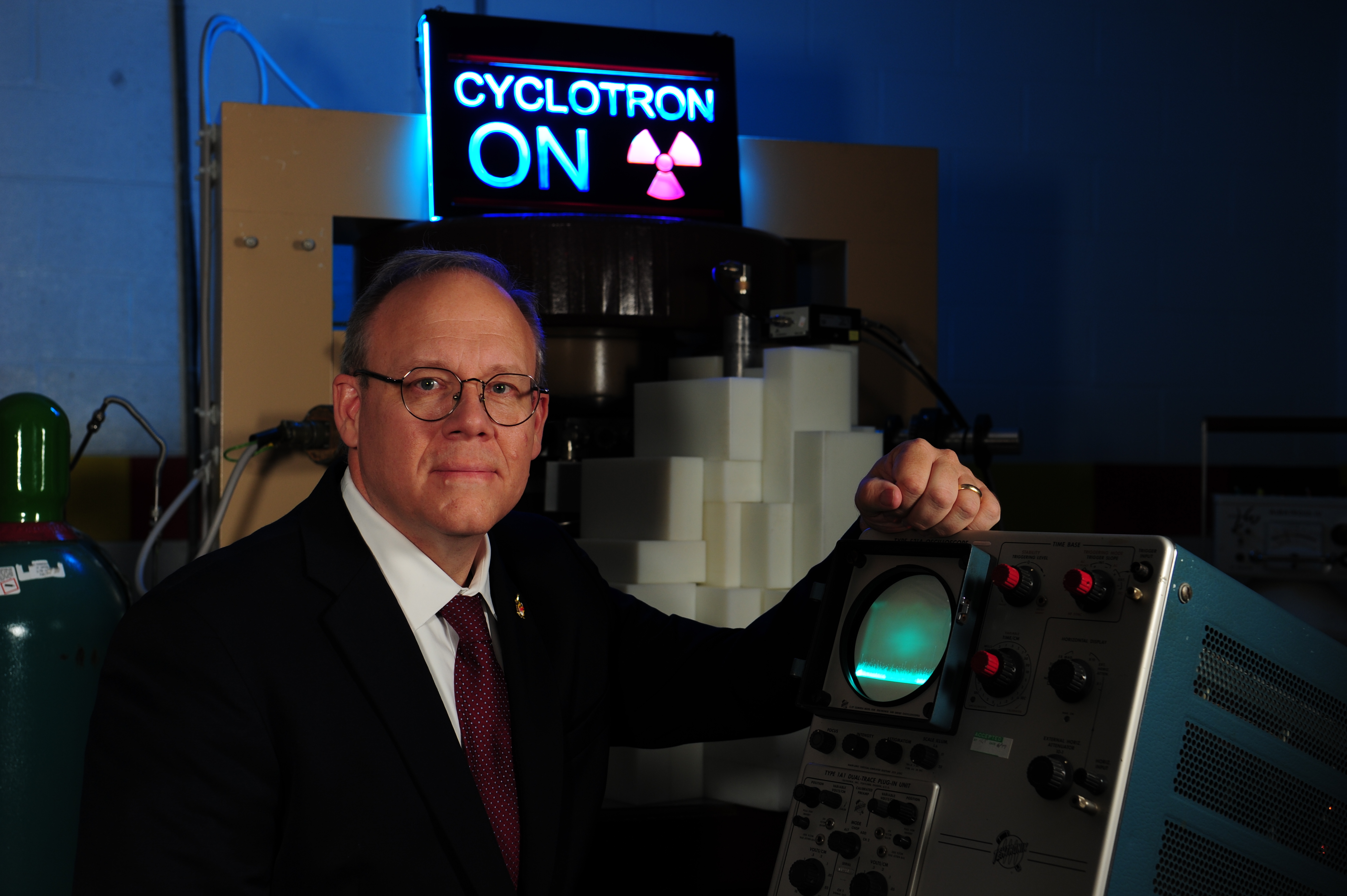
V. The Cyclotron: For more than three decades Tim Koeth has been involved in an ongoing cyclotron project that has evolved into a one-of-a-kind instructional accelerator program. Initially started in his parent’s basement in the 1990s, moved to Rutgers University in 2000, and recently (2016) moved to UMD where it is the centerpiece of a Capstone Design class. For more information about the cyclotron please go to the cyclotron website. During the Covid pandemic our hands-on experimental capstone laboratory course was interupted. So as not to loose momentum, I set out to caputure the curriculum that had been created over the past five years or so with a set of YouTube videos. The first "season" includes nine episodes that detail the principles of acceleration and take a deep dive into how each of the major cyclotron subsystems work, and describe their role in the production of beam. The second season, now in production, focus on neutron production and subsequent experimental techniques that they enable. Please have a look at our YouTube channel: Cyclotrons!
VI. High Resolution Gamma Ray Spectroscopy using High Purity Germanium (HPGe) is a continuous project for Koeth. HPGe spectroscopy is an analytic technique to identity and quantify gamma emitting radionuclides. This has applications from environmental measurements to neutron activation analysis. I have been a gamma spectroscopist for over 25 years now.
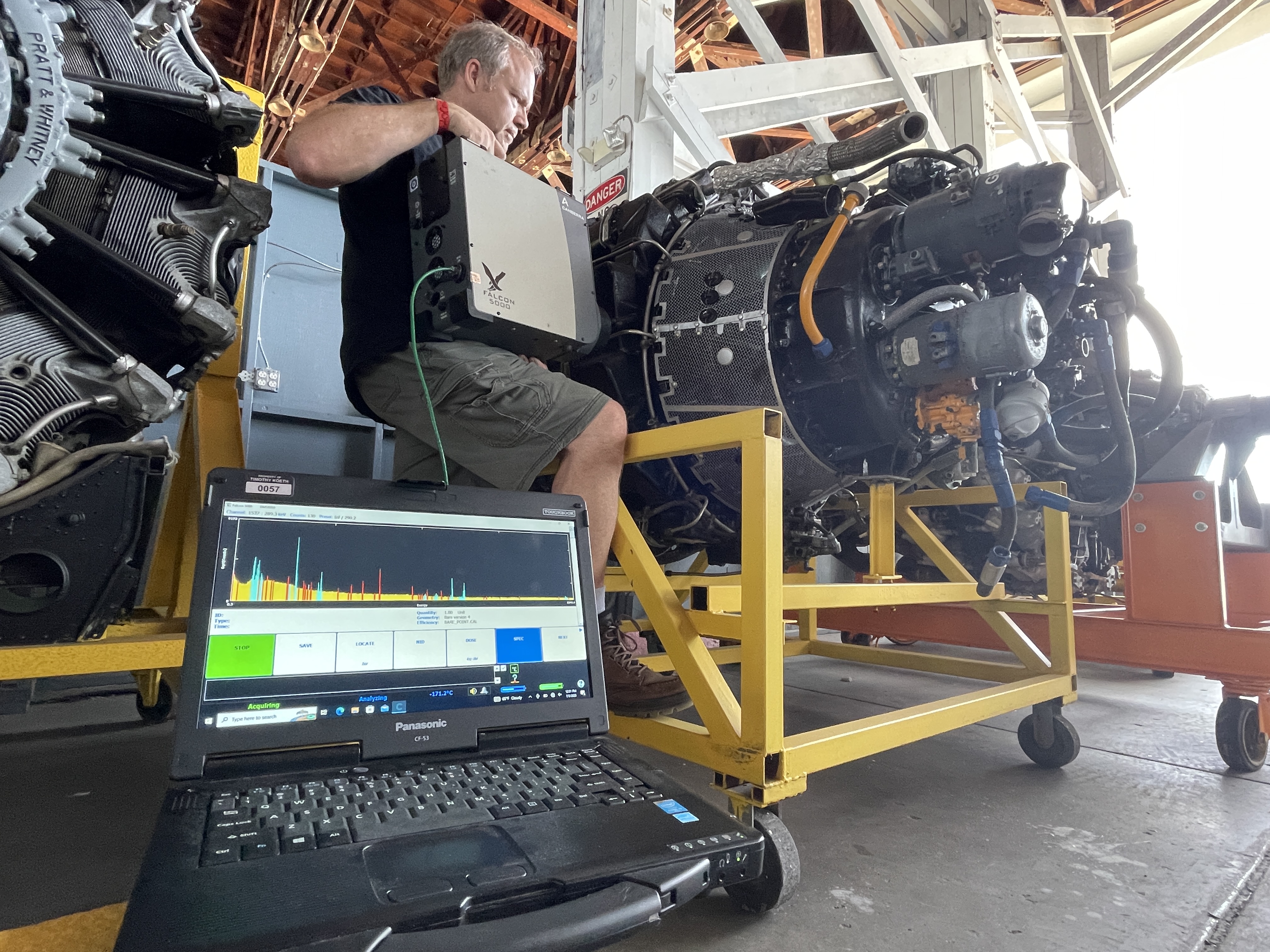
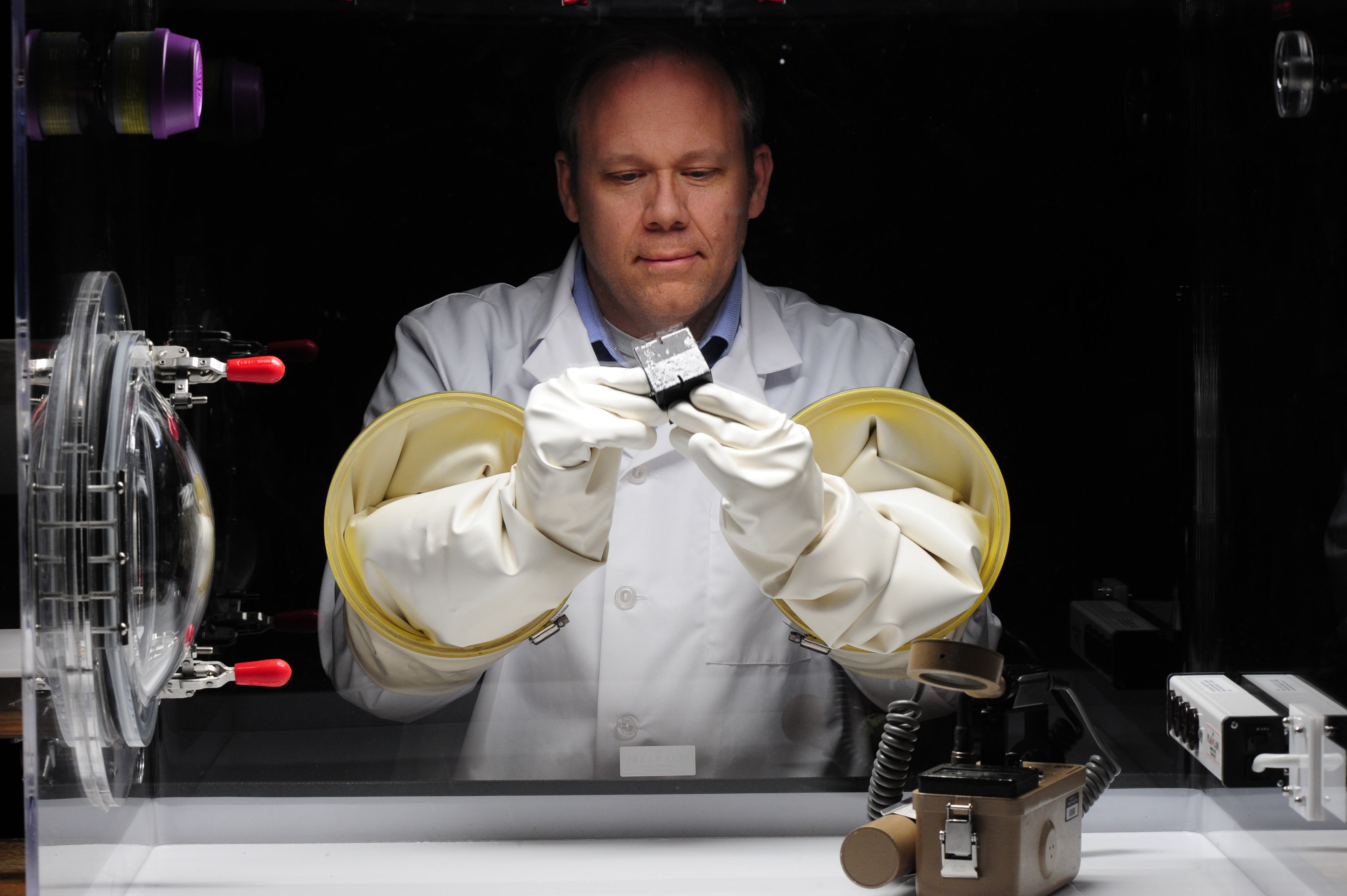
VII. Mystery of the German Uranium Cube is a history of science project undertaken by Koeth and his Post-Doc Mimi Hiebert that is seeking to learn the meandering path a 5 pound block of natural uranium that landed in Koeth's hand's in 2013. Koeth and Hiebert have written an article in Physics Today and has since gained developed strong public interest in determining their origins and final disposition. On August 29th NPR's Morning Edition aired an interview with Koeth & Hiebert.
UNIVERSITY OF MARYLAND
-
ENMA427 Materials at the Extremes
Offered: S2026 (and every spring semester go forward)
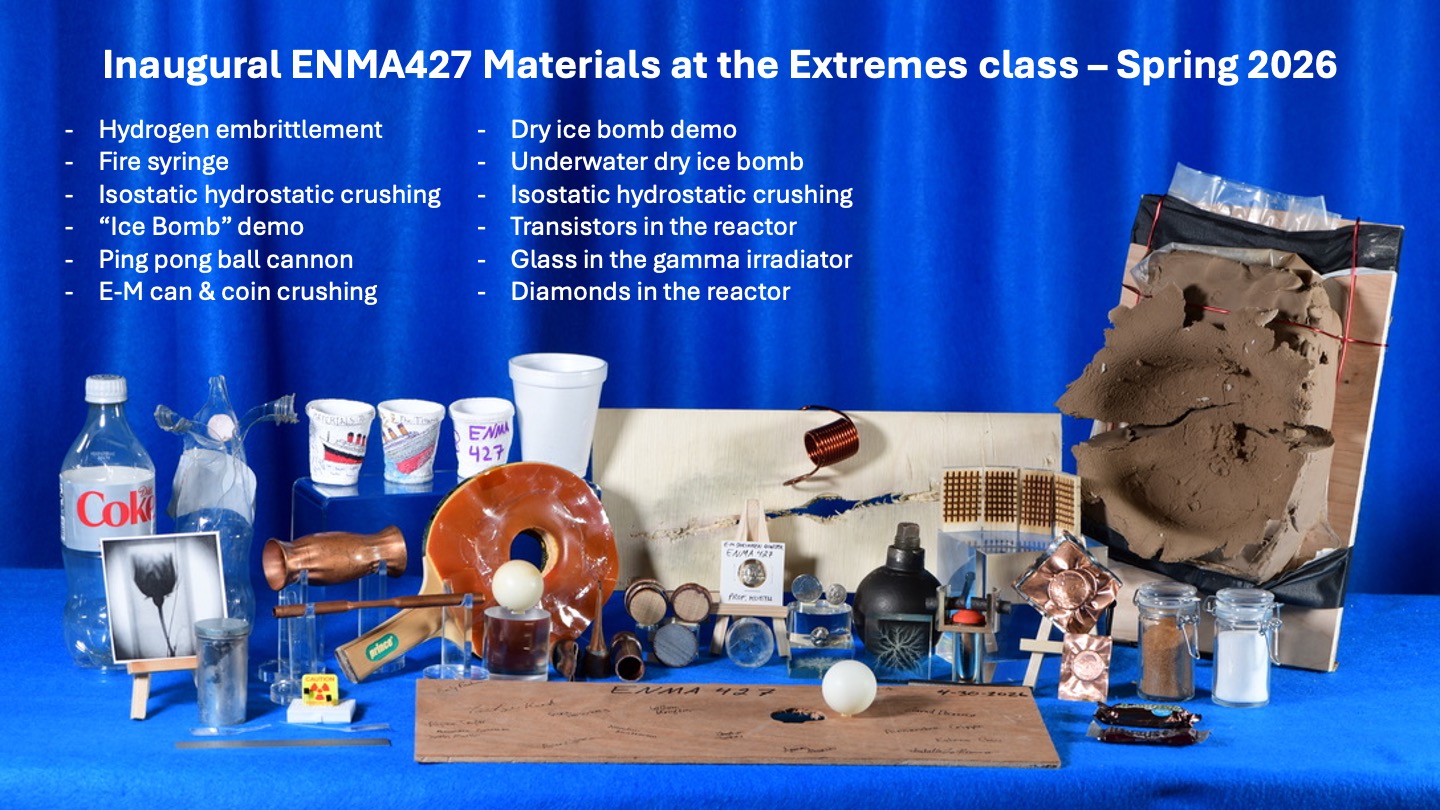
Description: This course will provide a study into materials in extreme environments through lectures, detailed real-life case studies and demonstrations. The main objective of this course is to apply your knowledge of materials science and the role it plays in combating the failure modes caused by extreme environments. This course is designed to guide students through an understanding of what defines an extreme environment and how materials are being designed to address these conditions.
After it's inaugural offering S2026 the student and faculty response was overwhelming! As a result, I will be offering it every spring semester.
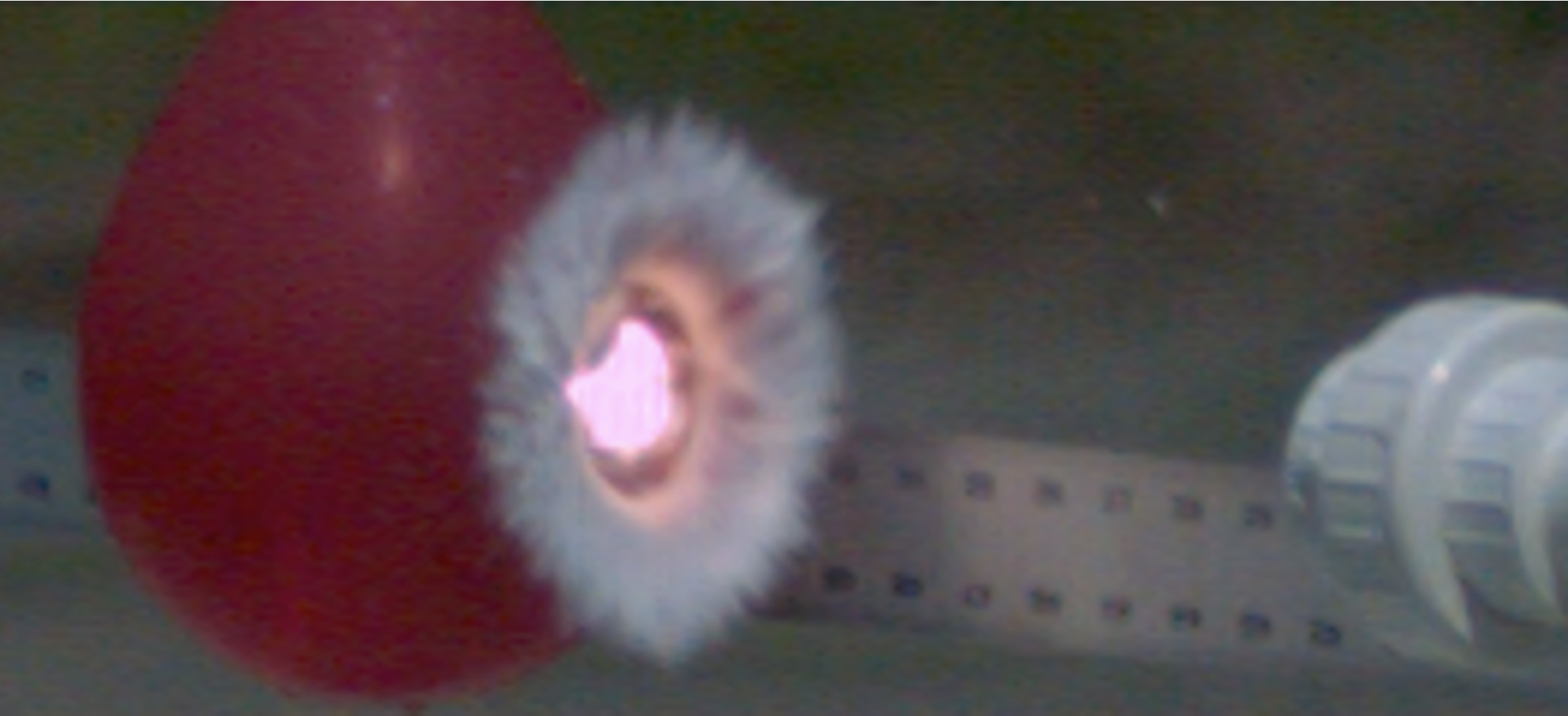
The following image is perhaps my most favorite from our S2026 class. This is a single frame from a 40,000 frame per second camera capturing the instant when a 2.7 gram ping pong ball strikes a water balloon at Mach 2!
-
ENMA300 Introduction to Materials Science & Engineering
Offered: F2025, F2022, S2022, F2021
Description: Structure of materials, chemical composition, phase transformations, corrosion and mechanical properties of metals, ceramics, polymers and related materials. Materials selection in engineering applications.
-
ENMA486 Seminar in Materials Science & Engineering
Offered: S2025, F2024, F2020, S2020
Description: Current research in materials science and engineering and related fields. The lectures are presented by scientists and engineers from academia, national laboratory, US government, etc., in the format of seminars.
-
ENMA688 Graduate Seminar in Materials Science & Engineering
Offered: S2025, F2024, S2020, F2020
Description: Current research in materials science and engineering and related fields. The lectures are presented by scientists and engineers from academia, national laboratory, US government, etc., in the format of seminars.
-
ENMA499 Senior Laboratory Project
Offered: S2025, F2021
Description: This course provides an opportunity for independent self-guided materials research. Students will answer a materials science question that they propose, establishing a previously unknown connection between at least two of the following four aspects of materials: processing, structure, properties, and performance. Projects may alternatively propose novel innovations in one of these aspects, such as a rigorous search for a new structure or a never-before-seen property.
-
ENMA698 Special Problems in Materials Science & Engineering
Offered: S2025, S2022
Description: This course is an opportunity for independent scholarly research in Materials Science and Engineering in a one-on-one setting with Prof. Koeth as the research mentor. This course includes clearly defined research project with intermediate milestones, culminating in a scholarly research paper.
-
ENMA490 Materials Design (MSE Capstone)
Offered: S2023
Description: Capstone design course. Students work in teams on projects evaluating a society or industry-based materials problem and then design and evaluate a strategy to minimize or eliminate the problem; includes written and oral presentations.
-
ENEE408T/PHYS499T/ENMA489T Accelerator Physics Capstone Design Project – Building 5 MeV Cyclotron
Offered: S2020, S2019, S2018, S2017, S2017
Description: Cyclotrons are versatile accelerators whose use, because of an unsurpassed economic footprint, continues to expand in basicresearch, industry, medicine, and education. They also capture most of fundamental physics and technology of even the biggest particle accelerators, such as CERN’s LHC. This course provides students with a hands-on introduction to fundamental beam physics as well as the technology of cyclotrons, their design, commissioning, and operation. Students of this course will be designing and building a cyclotron. The level is intended for senior undergraduate and junior graduate students in electrical engineering and physics. Lectures will cover theoretical and practical aspects of cyclotrons, their design, and operation, including magnetic resonance [cyclotron] acceleration, ion sources, weak and azimuthally varying field (AVF) beam focusing, and beam extraction methods. We will cover relevant technology of cyclotron radio frequency and vacuum systems as well as discuss phenomena that limit energy and intensity, such as resonances and space charge. Generations of UMD student led teams will uniquely guide the design and oversee the construction of the UMD 19-Inch Educational Cyclotron.
-
ENMA422 Radiation Effects of Materials
Offered: F2017
Description: In this class we start with the fundamental types of ionizing radiation. We then begin to understand radiation’s interaction with matter through radiation measurement devices, such as dosimeter and detectors. We then explore radiation processing, radiation damage effects in various media. We understand Radiation Chemistry, materials for radioactive waste, and finish with a survey of applications of radiation: medical, power, and security related topics.
-
ENME432 Reactor and Radiation Measurements.
Offered: F2018, F2017, S2017, F2016, S2016, F2015
Description: Basics concepts of nuclear radiation and radiation detectors including types of radiation, radioactive decay, and interactions of radiation with matter. The major objective of ENME 432 is to teach students the measurements required to characterize radiation emitted from active nuclear materials. Emphasis is placed on laboratory measurements using modern radiation detectors and processing electronics and analysis software. Understanding the principles of nuclear radiation and detector technology underlying measurements and the critical thinking skills necessary to effectively assess experimental results is emphasized.
-
PHYS299/399/499 Special Problems in Physics
Offered: F2023, S2023, F2020, F2020, S2020, S2020, S2018, F2015, Summer1 2015, Summer2 2015
Description: This course is an opportunity for independent scholarly research in physics in a one-on-one setting with Prof. Koeth as the research mentor. This course includes clearly defined research project with intermediate milestones, culminating in a scholarly research paper.
UNITED STATES PARTICLE ACCELERATOR SCHOOL (USPAS)
- Cyclotron Design, USPAS Winter 2017, UC Davis, 1.5cr (graduate level)
- Cyclotron Design, Operation, and Measurement, USPAS Summer 2015, Rutgers University, 3cr (graduate level)
- Cyclotron Design, USPAS Winter 2013, Duke University, 1.5cr (graduate level)
- Fundamentals of Accelerator Physics, USPAS Summer 2011, Stony Brook, 2011
- Radiation & Matter in Accelerator Environments – Summer 2019
Updated August 15, 2026
- “Nuclear Archaeology Reassesses Heisenberg's Last Reactor Experiment, ” P. Park, B.N. Robertson, M. E. Hiebert, J. Zhao, C. Sivels, T. W. Koeth, PNAS Nexus, accepted August 12, 2026
- “Optimization of a Compact Pulsed Electron Beam Ion Trap/Source for the generation of Low-Z Highly Charged Ions, ” A. Shearin, B. Beaudoin, S. Moroch, T. W. Koeth, Review of Scientific Instruments, Rev. Sci. Instrum. 97, 073305 (2006), published July 13, 2026, https://doi.org/10.1063/5.0341209
- “Breakdown Front Dynamics of Streamer-like Discharge in Electron-Charged Polymethyl Methacrylate, ” K. Sturge, N.Hoppis, A. Levitan, J. Krutzler, M. A. Wiratmo, N. Schwartz, E. Basinger, B. Beaudoin, B. C. Clifford, J. Cumings, J. Fitzgibbon, E. H. Frashure, S. Henderson, J. Lichthardt, A. Shearin, J. Barney, K. Smith, D. Walter, H. Wilson, T. W. Koeth, Journal of Physics D: Applied Physics, published May 21, 2026, https://doi.org/10.1088/1361-6463/ae686a
- “Obervation and Characterization of Periodic Structure Formation in Dielectric Breakdown Channels of Electron Irradiated Polymethyl Methacrylate, ” N. R. Schwartz, B. C. Clifford, C. Chun, E. H. Frashure, K. M. Sturge, M. Wiratmo, N. Hoppis, H. Wilson, J. Fitzgibbon, E. Bassinger, B. L. Beaudoin, J. Cumings, and T. W. Koeth, Journal of Applied Physics, 139, 013301, (2026), https://doi.org/10.1063/5.0308472
- “Measurements of Fusion Yield of the Centrifugal Mirror Fusion Experiment,” John L. Ball, Shon Mackie, Jacob G. van de Lindt, Willow Morrissey, Artur. Perevalov, Zachary Short, Nicholas Schwartz, Timothy W. Koeth, Brian L. Beaudoin, Carlos A. Romero-Talamás, John Rice, R. Alex Tinguely, submitted to Nuclear Fusion, accepted on October 3, 2025, https://arxiv.org/abs/2505.23047#
- "Half-life Measurements of Highly Charged Radioisotopes by Nuclear Recoil in a Penning Trap." Scott Moroch, Carolyn Chun, Doug VanDerwerken, Ariana Shearin, Brian L. Beaudoin, Klaus Blaum, and Timothy W. Koeth, Physical Review Research, 7, 033226, Published September 5, 2025, DOI: https://doi.org/10.1103/cv2g-c39p
- “Electrically insulating materials for centrifugal mirrors” Nick R. Schwartz, Carlos A. Romero-Talamás, Marlene I. Patino, Daisuke Nishijima, Matthew J. Baldwin, Russel P. Doerner, Artur Perevalov, Nathan Eschbach, Zachary D. Short, John Cumings, Ian G. Abel, Brian Beaudoin, Timothy W. Koeth, Journal of Nuclear Materials, Volume 615, September 2025, 155957 https://doi.org/10.1016/j.jnucmat.2025.155957
- “Characterization of electrostatic discharge currents in electron-charged polymethyl methacrylate as a proxy for natural compact intracloud discharges,” K.M. Sturge, N. Hoppis, A.M. Shearin, B.L. Beaudoin, B.C. Clifford, J.R. Fitzgibbon, E.H. Frashure, J.E. Krutzler, A.A. Levitan, P. O’Shea, H.J. Wilson, T.W. Koeth, Phys. Rev. E 111, 065207 – Published 13 June, 2025, DOI: https://doi.org/10.1103/m62y-7lf8
- “Myths of nuclear graphite in World War II, with original translations” Patrick J Park, S. Herzele, Timothy W. Koeth, EPJ H 50, 11 (2025). https://doi.org/10.1140/epjh/s13129-025-00098-7
- “Simulation and Modeling of Prompt Electrical Tree Formation During Dielectric Breakdown in Space-Charged Dielectrics” Montano, Thomas & Chun, Carolyn & Sturge, Kathryn & Hoppis, Noah & Shearin, Ariana & Hannan, José & Koeth, Timothy. (2025). Simulation and Modeling of Prompt Electrical Tree Formation During Dielectric Breakdown in Space-Charged Dielectrics. IEEE Transactions on Dielectrics and Electrical Insulation. PP. 1-1. 10.1109/TDEI.2025.3550102
- “Dynamics of high-speed electrical tree growth in electron-irradiated polymethyl methacrylate” Kathryn M. Sturge, Noah Hoppis, Ariana M. Bussio, Jonathan Barney, Brian Beaudoin, Cameron Brown, Bruce Carlsten, Carolyn Chun, Bryson C. Clifford, John Cumings, Nicholas Dallmann, Jack Fitzgibbon, Emily H. Frashure, Ashley E. Hammell, José Hannan, Samuel L. Henderson, Miriam E. Hiebert, James Krutzler, Joseph Lichthardt, Mark Marr-Lyon, Thomas Montano, Nathan Moody, Alexander Mueller, Patrick O’Shea, Ryan Schneider, Karl Smith, Bryce Tappan, Clayton Tiemann, David Walter, and Timothy W. Koeth. Science, 18 Jul 2024, Vol 385, Issue 6706, pp. 300-304, DOI: 10.1126/science.ado5943
- “Incident Beam Current Impact on Space-Charge Retention in Electron Dynamitron Irradiated Polymethyl Methacrylate” Kathryn M. Sturge, Noah Hoppis, Aneesh Anandanatarajan, Ariana M. Bussio, Bryson C. Clifford, Emily H. Frashure, Miriam E. Hiebert, James E. Krutzler; Timothy W. Koeth. Applied Physics Letters – Materials. 12, 031119
- “Imaging High Jitter, Very Fast Phenomena: A Remedy for Shutter Lag” Noah Hoppis, Kathryn M. Sturge, Jonathan E. Barney, Brian L. Beaudoin, Ariana M. Bussio, Ashley E. Hammell, Samuel L. Henderson, James E. Krutzler, Joseph P. Lichthardt, Alexander H. Mueller, Karl Smith, Bryce C. Tappan, Timothy W. Koeth. Review of Scientific Instruments, 94(12) 125109 (2023). DOI: 10.1063/5.0168764
- “Optical transmission characterization of fused silica materials irradiated at the CERN Large Hadron Collider” S. Yang, A. Tate, R. Longo, M. Sabate Gilarte c, F. Cerutti c, S. Mazzoni c, M. Grosse Perdekamp a, E. Bravin c, Z. Citron, B. Kühn, F. Nürnberg, B. Cole, J. Fritchie, I.Gelber, M. Hoppesch, S. Jackobsen, T. Koeth, C. Lantz, D. MacLean, A. Mignerey, M. Murray, M. Palm, M. Phipps, S. Popescu, N. Santiago, S. Shenkar, Steinberg i, Nuclear Instruments and Methods in Physics Research, A, 7 July 2023, https://doi.org/10.1016/j.nima.2023.168523
- “22Na activation level measurements of fused silica rods in the LHC target absorber for neutrals compared to simulations” S. Yang, M. Sabate Gilarte, A. Tate, N. Santiago, R. Longo, S. Mazzoni, F. Cerutti, E. Bravin3, M. Grosse Perdekamp, G. Lerner, D. Prelipcean, Z. Citron, B. Cole, S. Jackobsen, M. D. Kaminski, T. Koeth, C. Lantz, D. MacLean, A. Mignerey, M. Murray, M. Palm, M. Phipps, P. Steinberg, and A. Tsinganis, Physical Review Accelerators and Beams 25, 091001 (2002), DOI: 10.1103/PhysRevAccelBeams.25.091001
- “Space-charge effects in low-energy flat-beam transforms,” Scott B. Moroch, Timothy W. Koeth, Bruce E. Carlsten, Journal of Physics Communication, 6 085005 (2022). DOI: 10.1088/2399-6528/ac7d37
- Invited: “Tracking the Journey of a Uranium Cube,” T. W. Koeth, M. E. Hiebert, Physics Today, 72 (5) 36-43 (2019). DOI: 10.1063/PT.3.4202
- “Multi-Stream Instability of a Single Long Electron Bunch In a Storage Ring,” B. Beaudoin, I. Haber, R. A. Kishek, T. W. Koeth, T. M. Antonsen Jr., Physics of Plasmas, Accepted: April 18, 2019. DOI: 10.48550/arXiv.1901.05987
- “Single-invariant nonlinear optics for a small electron recirculator,” K. Ruisard, H. B. Komkov, B. Beaudoin, I. Haber, D. Matthew, T. Koeth, Physical Review Accelerators and Beams 22 041601 (2019) DOI:10.1103/PhysRevAccelBeams.22.041601
- ““Quadrupolar mode measurements for space charge dominated beams,” William D. Stem, Brian L. Beaudoin, Irving Haber, and Timothy W Koeth, Physics of Plasmas, Accepted April 23, 2018. DOI: 10.1063/1.5026677
- Invited: “Long-path-length experimental studies of longitudinal phenomena in intense beams,” B. Beaudoin, I. Haber, R. A. Kishek, S. Bernal, and T.W. Koeth, Physics of Plasmas, 23(5) 056701 (2016). DOI: 10.1063/1.4943522
- “Demonstration of neutron detection utilizing open cell foam and noble gas scintillation,” C.M Lavelle, M. Coplan, E.C. Miller, A.K. Thompson, A.L. Kowler, R.E. Vest, A.T. Yue, T.W. Koeth, M. Al-Sheikhly, C.W. Clark, Applied Physics Letters, 106(9) 094103 (2015). DOI: 10.1063/1.4914001
- Invited: “Undergraduate Education with the Rutgers 12-Inch Cyclotron” Timothy W. Koeth, CAARI2014, Physics Procedia, Volume 66, June 2015, Pages 622-631, http://www.sciencedirect.com/science/article/pii/S1875389215002369
- Invited: “Modeling HIF relevant longitudinal dynamics in UMER,” B. Beaudoin, S. Bernal, C. Blanco, I. Haber, R.A. Kishek, T. Koeth, and Y. Mo, Nuclear Instruments and Methods A, 733 178-181 (2014). DOI: 10.1016/j.nima.2013.05.077
- Invited: “The University of Maryland Electron Ring program,” R.A. Kishek, B. Beaudoin, S. Bernal, M. Cornacchia, D. Feldman, R. Fiorito, I. Haber, T. Koeth, Y. Mo, P.G. O'Shea, K. Poor Rezaei, D. Sutter, and H. Zhang, Nuclear Instruments and Methods A, 733 233-237 (2014). DOI: 10.1016/j.nima.2013.05.062
- “Longitudinal confinement and matching of an intense electron beam,” B. Beaudoin, I. Haber, R.A. Kishek, S. Bernal, T. Koeth, D. Sutter, P.G. O.Shea, and M. Reiser," Physics of Plasmas, 18 013104 (2011). DOI: 10.1063/1.3537820
- “Smooth approximation model of dispersion with strong space charge for continuous beams,” S. Bernal, B. Beaudoin, T. Koeth, P. G. O’Shea, Physical Review Special Topics - Accelerators & Beams, 14 104202 (2011). DOI: 10.1103/PhysRevSTAB.14.104202
- “First observation of the exchange of transverse and longitudinal emittances,” J. Ruan, A. H. Lumpkin, A. S. Johnson, R. Thurman-Keup, H. Edwards, R.P. Fliller, T. W. Koeth, and Y.-E Sun, Physics Review Letters, 106 233801 (2011). DOI: 10.1103/PhysRevLett.106.244801
- “Superconducting cavity driving with FPGA controller,” T. Czarski, W. Koprek, K. T. Pozniak, R. S. Romaniuk, S. Simrock, A. Brandt, B. Chase, R. Carcagno, G. Cancelo, T. Koeth, Nuclear Instruments and Methods A, 568(1) 854-862 (2006). DOI: 10.1016/j.nima.2006.07.063
- “Demonstration of 4H-SiC visible-blind EUV and UV detector with large detection area,” X. Xin, F. Yan, T. W. Koeth, C. Joseph, J. Hu, J. Wu, J.H. Zhao, Electronic Letters, 41(21) 1192-1193 (2005). DOI: 10.1049/el:20052977
- “The effect of highly ionizing particles on the CMS silicon strip tracker,” W. Adam et al., Nuclear Instruments and Methods in Physics Research Section A, 543(2-3) 463-482 (2005). DOI: 10.1016/j.nima.2004.11.049
- “New results on diamond pixel sensors using Atlas frontend electronics,” M. Keil et al., Nuclear Instruments and Methods in Physics Research Section A: Accelerators, Spectrometers, Detectors and Associated Equipment, 501(1) 153-159 (2003). DOI: 10.1016/S0168-9002(02)02025-9
- “Status of the R&D activity on diamond particle detectors,” W. Adam et al., Nuclear Instruments and Methods in Physics Research Section A: Accelerators, Spectrometers, Detectors and Associated Equipment, 511(1-2) 124-131 (2003). DOI: 10.1016/S0168-9002(03)01777-7
- “CVD diamond pixel development,” R. Stone, et al., IEEE Transactions on Nuclear Science, 49 1059-1062 (2002). DOI: 10.1109/TNS.2002.1039614
- “Beam test results of the US-CMS forward pixel detector,” M. Atac et al, Nuclear Instruments and Methods in Physics Research Section A: Accelerators, Spectrometers, Detectors and Associated Equipment, 488(1-2) 271-281 (2002). DOI: 10.1016/S0168-9002(02)00472-2
- “The development of diamond tracking detectors for the LHC,” RD42 Collaboration, W. Adam et al., Nuclear Instruments and Methods in Physics Research Section A: Accelerators, Spectrometers, Detectors and Associated Equipment, 514(1-3) 79-86 (2003). DOI: 10.1016/j.nima.2003.08.086
- “Radiation tolerance of CVD diamond detectors for pions and protons,” W. Adam et al., Nuclear Instruments and Methods in Physics Research Section A: Accelerators, Spectrometers, Detectors and Associated Equipment, 476(3) 686-693 (2002). DOI: 10.1016/S0168-9002(01)01666-7
- “Performance of irradiated CVD diamond micro-strip sensors,” W. Adam et al., Nuclear Instruments and Methods in Physics Research Section A: Accelerators, Spectrometers, Detectors and Associated Equipment, 476(3) 706-712 (2002). DOI: 10.1016/S0168-9002(01)01671-0
- “Diamond Pixel Detectors,” Adam, et al., Nuclear Instruments and Methods in Physics Research Section A: Accelerators, Spectrometers, Detectors and Associated Equipment, 465(1) 88-91 (2001). DOI: 10.1016/S0168-9002(01)00358-8
- “Micro-strip sensors based on CVD diamond,” Adam, et al., Nuclear Instruments and Methods in Physics Research Section A: Accelerators, Spectrometers, Detectors and Associated Equipment, 453(1–2) 141-148 (2000). DOI: 10.1016/S0168-9002(00)00620-3